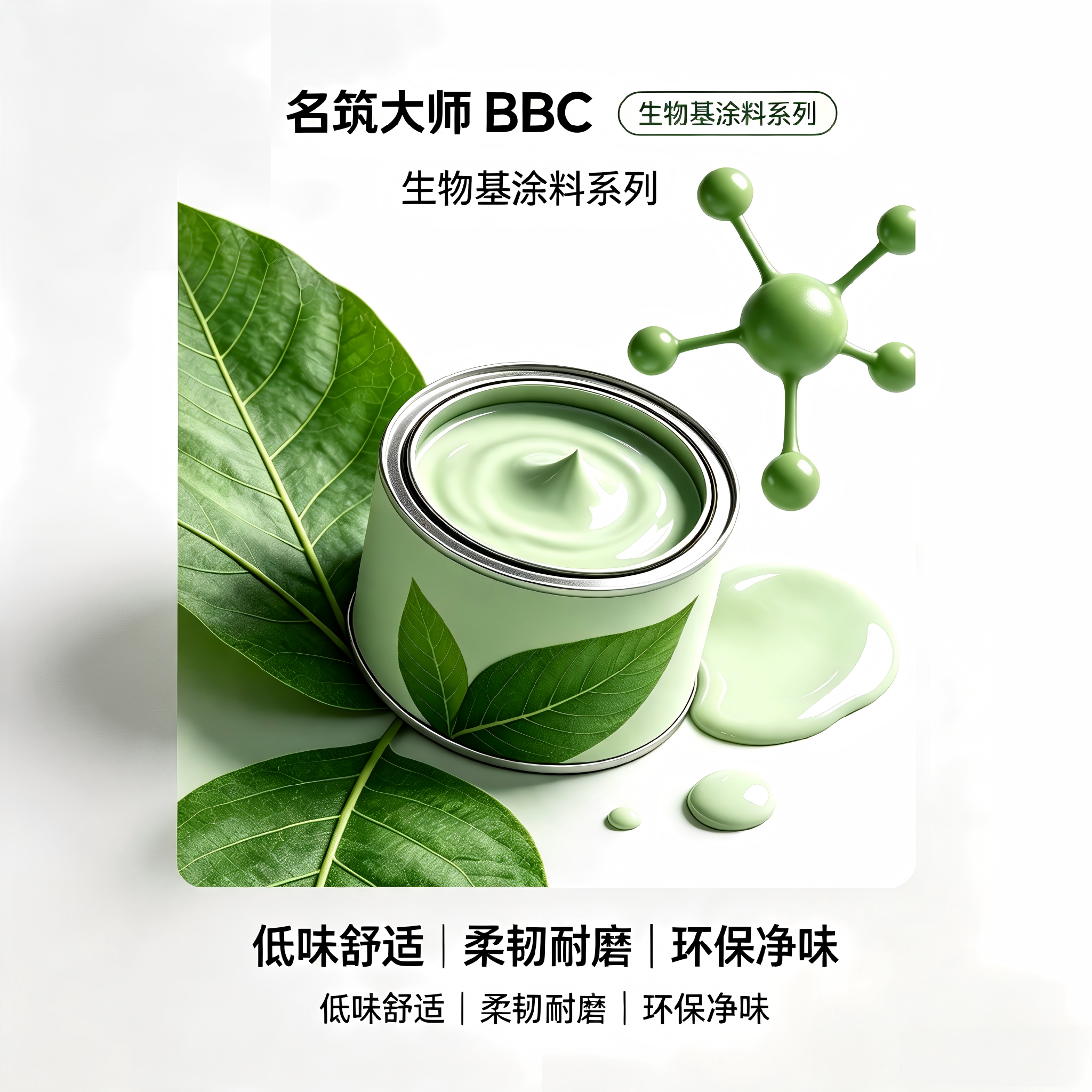
Bio-based coatings
Coating that breathes like a plant
Key Features
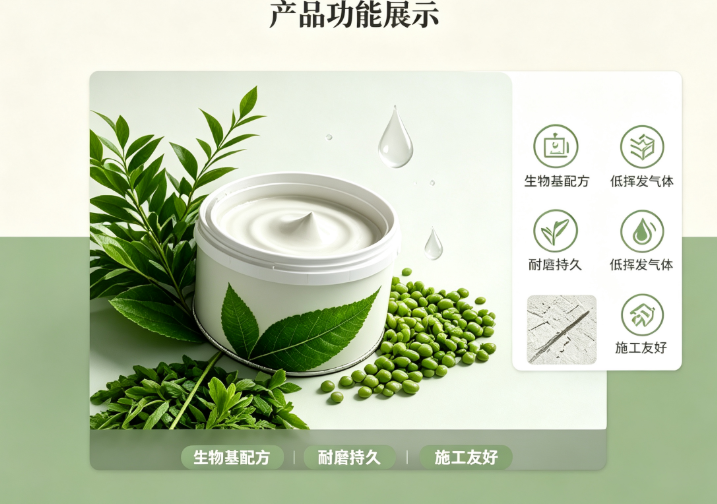
Replace petroleum-based synthetic resins with renewable plant materials like corn starch and rosin to reduce carbon emissions at the source. The coating releases no harmful volatile compounds.
The coating preserves the natural micro-channels formed by plant fibers, allowing water molecules to freely enter and exit the wall so moisture doesn't get trapped inside.
Plant-based formula is free of formaldehyde, benzene derivatives, and organic solvents. Move in the same day it's applied—safe for infants and allergy-sensitive individuals.
The micro-porous structure automatically absorbs and releases moisture in response to environmental humidity. When indoor humidity is high, the wall absorbs water; when it is dry, it slowly releases moisture, significantly reducing humidity fluctuations.
The alkaline, plant-based formula naturally inhibits mold spore attachment and growth, keeping walls clean for the long term—no blackening or dampness.
Why choose it
Traditional coatings use petroleum-based resins to form a film. Their dense, non-breathable structure traps moisture inside walls, leading to dampness, peeling, and mold over time. Bio-based coatings fundamentally change this at the source by replacing synthetic resins with renewable plant materials. The resulting coating retains the natural micro-porous structure of plant fibers, giving walls true breathability. This is not just an eco-friendly concept—it physically solves wall permeability issues. For homes, schools, and wellness spaces that prioritize indoor air quality, it's a smarter choice for wall finishes.
Use Cases
Maternity & Baby Space
Infants have higher respiratory rates than adults and are more sensitive to airborne volatiles. Our plant-based, odor-free formula reduces harmful emissions at the source, while its breathable, anti-mildew coating keeps walls clean.
Wellness Project
Elderly individuals and those in rehabilitation require high indoor air quality. Our micro-pore humidity regulation maintains a stable environment, reducing joint discomfort caused by dampness.
School Classroom
In densely occupied classrooms with limited ventilation, plant-based coatings improve indoor air quality through odorless breathability, reducing odors and stuffiness.
Luxury Residences
Families that prioritize living quality demand more from paint—from raw materials to wall performance. Our bio-based formula delivers both eco-friendly attributes and practical durability.
Office Space
Ideal for long-term office environments sensitive to air quality: plant-based coatings reduce indoor VOC levels, and breathable walls enhance comfort.
Product Origin and Installation
Product Origin
The concept of bio-based coatings stems from a reevaluation of petroleum resources. Since the 20th century, the coatings industry has relied almost entirely on petroleum-based synthetic resins. While these offer excellent performance, they are non-renewable and continuously emit volatile organic compounds (VOCs) during production and use. By the 21th century, advances in renewable plant chemistry have enabled the maturation of bio-based resins derived from corn starch, rosin, vegetable oils, and other plant materials. Master Bio-Based Coatings leverages this technology to combine plant-based resins with natural mineral fillers. This approach preserves the application properties and durability of traditional coatings while imparting a micro-porous, breathable structure unique to plant fibers.
Construction Process
Surface Preparation: Remove dust, oil stains, and loose layers from the wall. Fill cracks with joint compound and smooth them out. Ensure moisture content remains below 10%.
Primer Sealing: Apply one coat of plant-based primer to penetrate and seal the substrate's capillary pores, enhancing topcoat adhesion.
Primer application: Apply 1–2 coats of bio-based primer, approximately {2.5} mm per coat. Allow at least 4 hours drying time between coats to ensure an even finish.
Surface Coating Application: Apply one coat of topcoat using roller or spray method to ensure uniform, complete coverage. Allow to air-dry and naturally cure for 48 hours until the film is fully formed.
Acceptance Inspection: The coating surface is smooth and even in color, feels warm to the touch without roughness, and has no odor.
Real-world effect
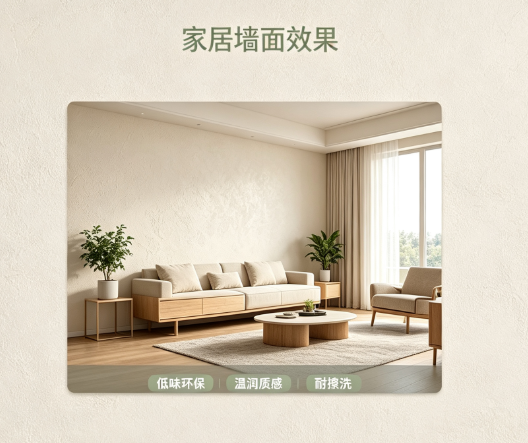
The finished wall features a warm white to light beige tone with a sheen between matte and eggshell—soft, not glaring or dull. From a distance, it appears as a clean, gentle solid surface with no visible roller marks or seams. Up close, the texture reveals subtle plant fibers, offering a feel similar to fine linen but softer. The surface is smooth and warm to the touch, free from the plastic-like or cold sensation typical of traditional latex paint. Under angled lighting, the wall creates a soft diffuse reflection, making the space feel bright and natural.
Showcase
InquireBio-based coatings
Leave your details, and our expert team will provide a customized solution.