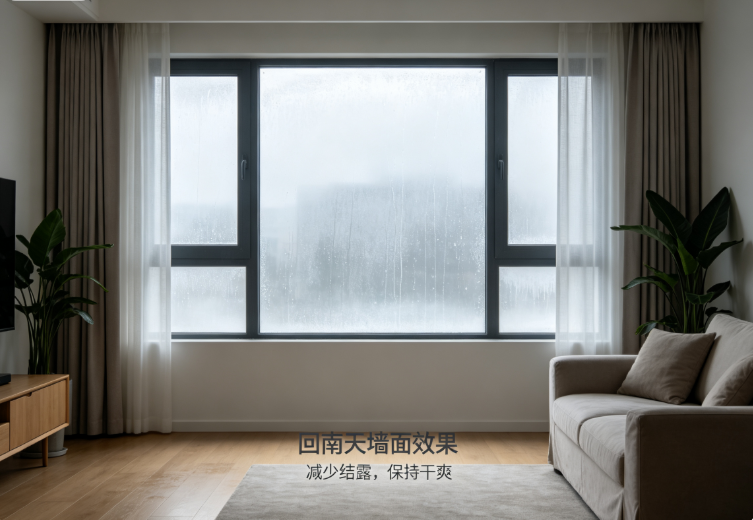
MSTR Temperature-Stable Anti-Condensation Coating
The wall where the steam stops
Key Features
Formulated with renewable plant-based materials, the coating features a micro-porous breathable structure that allows free moisture exchange between the interior and exterior of walls, preventing accumulation.
A thermal insulation buffer layer forms within the coating, reducing the temperature difference between the wall surface and indoor air to eliminate condensation at the source.
Alkaline bio-based ingredients naturally inhibit mold spore adhesion, keeping walls dry and clean over time without blackening or dampness.
The insulation layer reduces heat loss from the interior to the walls, lowering energy consumption for both winter heating and summer cooling.
Bio-based resin cross-linked structure ensures stable anti-condensation performance throughout the coating's service life, eliminating the need for repeated repairs.
Why choose it
Condensation occurs when a wall's surface temperature drops below the indoor dew point, causing moisture to condense into droplets. Conventional coatings only improve appearance; they don't address the temperature difference. MSTR Thermal-Regulating Anti-Condensation Coating tackles the issue from two angles: its bio-based microporous structure keeps walls breathable, while the insulation buffer layer minimizes the gap between wall surface and room temperature—eliminating the physical conditions that cause condensation. Unlike simply applying waterproof coatings or installing insulation boards, it doesn't alter wall structure or consume indoor space, delivering immediate results after application.
Use Cases
Northern heating room
Large temperature differences between indoors and outdoors in winter cause condensation on windows and interior walls. Our coating's insulation layer effectively reduces this temperature gap, eliminating water droplets on window sills and corners.
Southern China's Pluial Season Homes
Walls tend to dampen and darken in high-humidity environments. Our bio-based breathable structure expels moisture instead of trapping it inside, keeping walls dry.
Villa basement
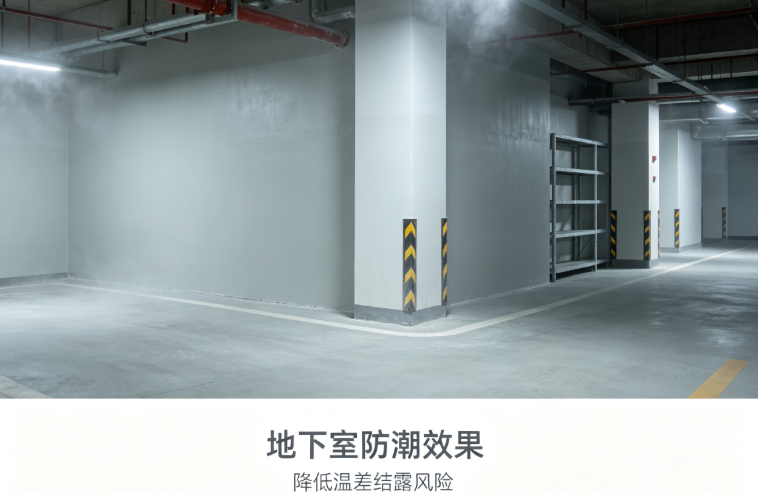
Basements are often damp and cold year-round, causing traditional coatings to peel. Our anti-condensation coating stops moisture at the source, making your basement suitable for living or storage.
Buildings in Coastal Humid Zones
Sea breeze accelerates wall aging by carrying salt and moisture. Our coating's mold-inhibiting and antimicrobial properties resist salt fog corrosion, extending the exterior maintenance cycle.
Storage space
Humidity fluctuations cause cargo to become damp and damaged. Anti-condensation wall treatments stabilize indoor humidity, protecting inventory safety.
Product Origin and Installation
Product Origin
The technology behind anti-condensation coatings is rooted in dew point control theory from building physics. Early solutions relied on thickening insulation layers or mechanical dehumidification, both of which were costly and space-consuming. The breakthrough with bio-based coatings lies in combining the micro-porous breathability of plant-derived resins with inorganic insulating fillers. This approach achieves both breathability and thermal insulation within a coating thickness of no more than 2mm, drawing inspiration from the "breathing" principle of traditional lime walls while upgrading performance through modern materials science.
Construction Process
Surface Preparation: Remove dust, grease, and loose layers from the wall. Fill cracks with joint compound and smooth them out.
Primer Sealer: Apply one coat of bio-based primer to seal the substrate's capillary pores and enhance adhesion.
Primer leveling: Apply anti-condensation primer 1-2 coats, approximately 0.5mm per coat, with a drying interval of at least 4 hours.
Topcoat application: Apply one coat of topcoat by rolling or spraying to ensure even coverage. Allow to air-dry, then cure naturally for 48 hours.
Acceptance Check: The coating surface must be smooth and free of sagging. It is considered acceptable if no cold sensation is felt when the back of the hand is pressed against the wall.
Real-world effect
The finished wall features a warm white to light beige finish with a sheen between matte and eggshell—soft on the eyes yet never dull. From a distance, it appears as a clean, uniform solid color with no visible roller marks or lap lines. Up close, the surface reveals a very fine granular texture, offering a feel similar to fine sandpaper but softer to the touch. It feels dry and warm, avoiding the coldness of traditional latex paint while remaining smoother than硅藻泥 (diatom mud). Under angled lighting, the wall produces a gentle diffuse reflection, creating a bright and comfortable atmosphere throughout the space.
Showcase
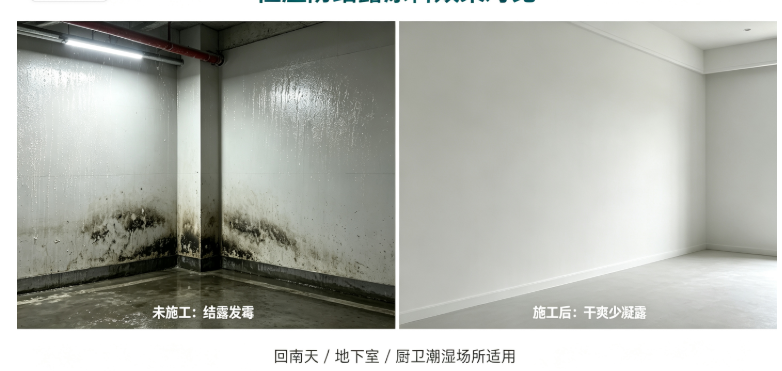
InquireMSTR Temperature-Stabilizing Anti-Condensation Paint
Leave your details, and our expert team will provide a customized solution.