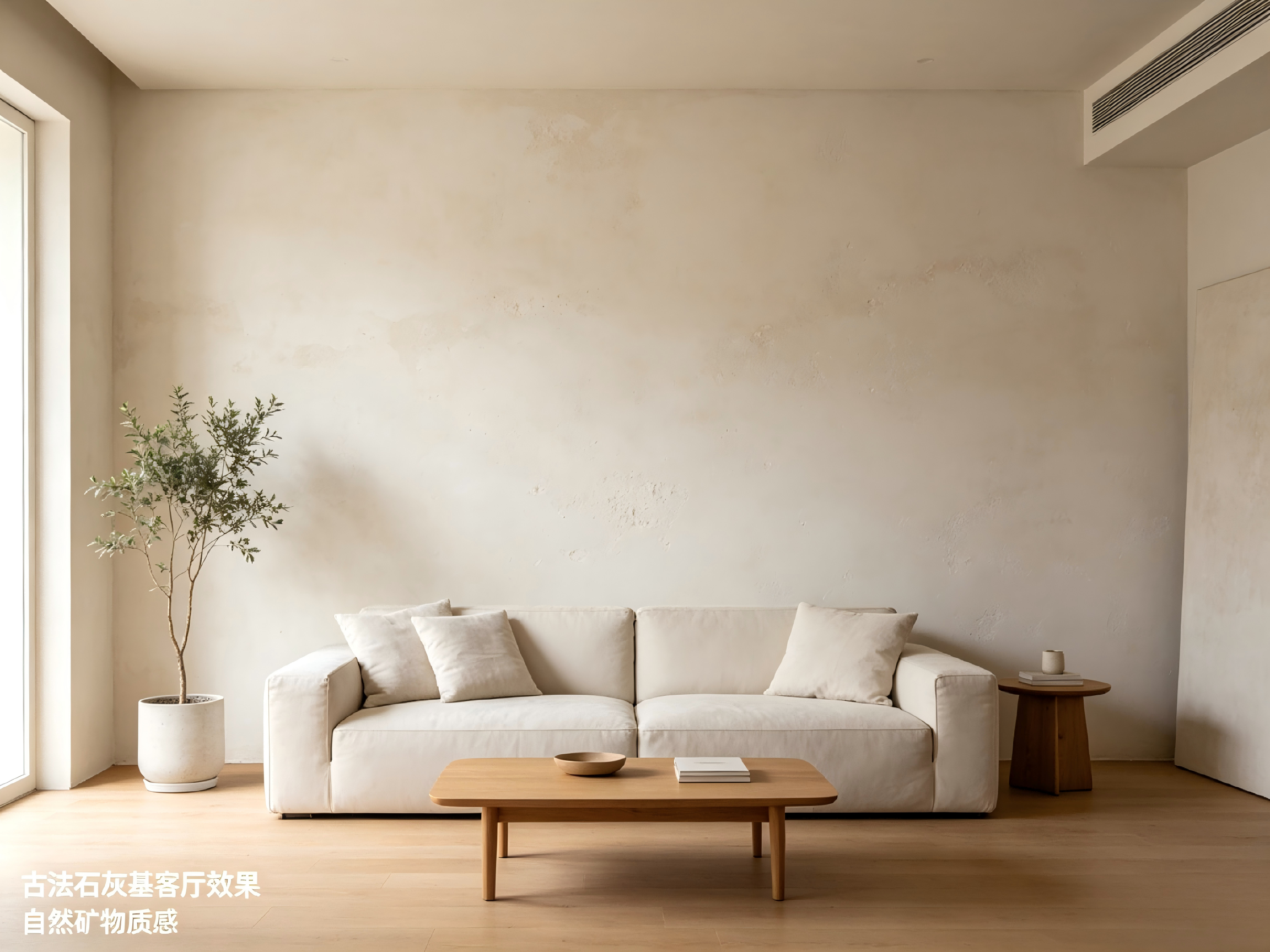
Lime-based wall materials
Let walls breathe
Key Features
The open-pore structure of lime-based coatings allows moisture vapor to pass freely, keeping walls breathable and balanced while automatically regulating indoor humidity.
The high alkalinity of lime (pH 12+) naturally inhibits mold and bacterial growth, eliminating the need for added chemical antimicrobials.
Honor traditional lime slaking and plastering techniques. Made from natural, non-toxic materials with zero chemical pollution during application.
Made from naturally quarried limestone; contains no synthetic resins or organic solvents. Safe for the environment and human health.
Why choose it
Lime is one of the oldest building materials used by humans, featured in the mortar of Egypt's pyramids and the dome of Rome's Pantheon. The core advantage of lime-based wall finishes is breathability: their open pore structure allows moisture within the walls to escape freely, unlike latex paints that trap it inside. This feature is critical for older homes and buildings in humid climates. Dry walls prevent mold growth, naturally improving indoor air quality.
Use Cases
Home Renovation
Old building walls often have high moisture content, causing traditional coatings to peel and flake. Lime-based breathable coatings allow wall moisture to evaporate naturally.
Humid regions
In humid conditions like the southern Meiyu season or coastal areas, lime-based walls maintain a dry and comfortable indoor environment through breathability and moisture regulation.
Healthy Home
For families with high indoor air quality standards, lime-based materials—zero VOC and naturally antimicrobial—are the healthiest choice.
Cultural Buildings
Restoration of historic buildings and adaptive reuse require materials with high compatibility. Lime-based products are naturally compatible with traditional brick and stone masonry.
Product Origin and Installation
Product Origin
Lime-based wall finishes inherit their craftsmanship from traditional lime plastering techniques. Limestone (calcium carbonate) is calcined at high temperatures to produce quicklime (calcium oxide). When hydrated with water, it becomes slaked lime (calcium hydroxide). Applied to walls, it reacts with carbon dioxide in the air and re-carbonates into calcium carbonate. This cycle allows lime coatings to become increasingly durable over time—truly "harder with age." Modern lime-based wall finishes optimize traditional formulas for improved application performance and a finer surface finish.
Construction Process
Base preparation: Remove loose layers and wet the base with water (lime requires a moist environment for construction).
Base Coat: Apply one coat of lime putty base (approx. 2mm thick) to fill surface pores.
Topcoat: Apply 0–1 coats of lime-based topcoat by troweling, approximately 1 mm per coat, and burnish with a stainless steel trowel.
Curing: Natural curing for 7-14 days. Maintain proper ventilation during this period to allow the coating to fully carbonize.
Real-world effect
After construction, the walls display a natural white to light beige hue with a pure, soft tone. From a distance, the surface appears smooth and clean, exuding the simple elegance of traditional lime walls. Up close, delicate hand-scraper marks reveal a naturally flowing texture, occasionally showing subtle mineral particles. The finish feels dry yet warm to the touch—similar to chalk but firmer, without roughness or dusting. Under angled lighting, the wall exhibits a soft matte effect with uniform color consistency.
Showcase
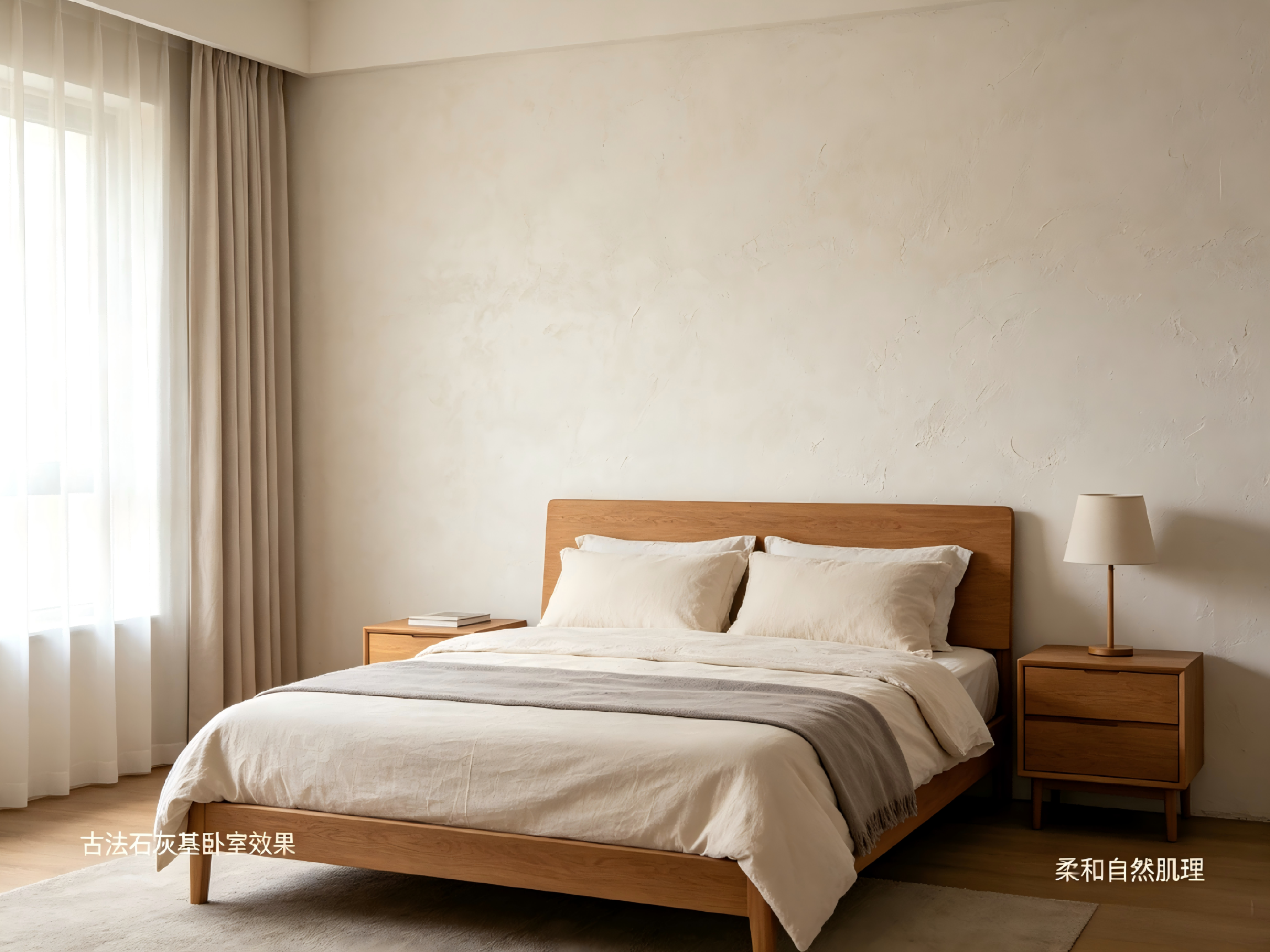
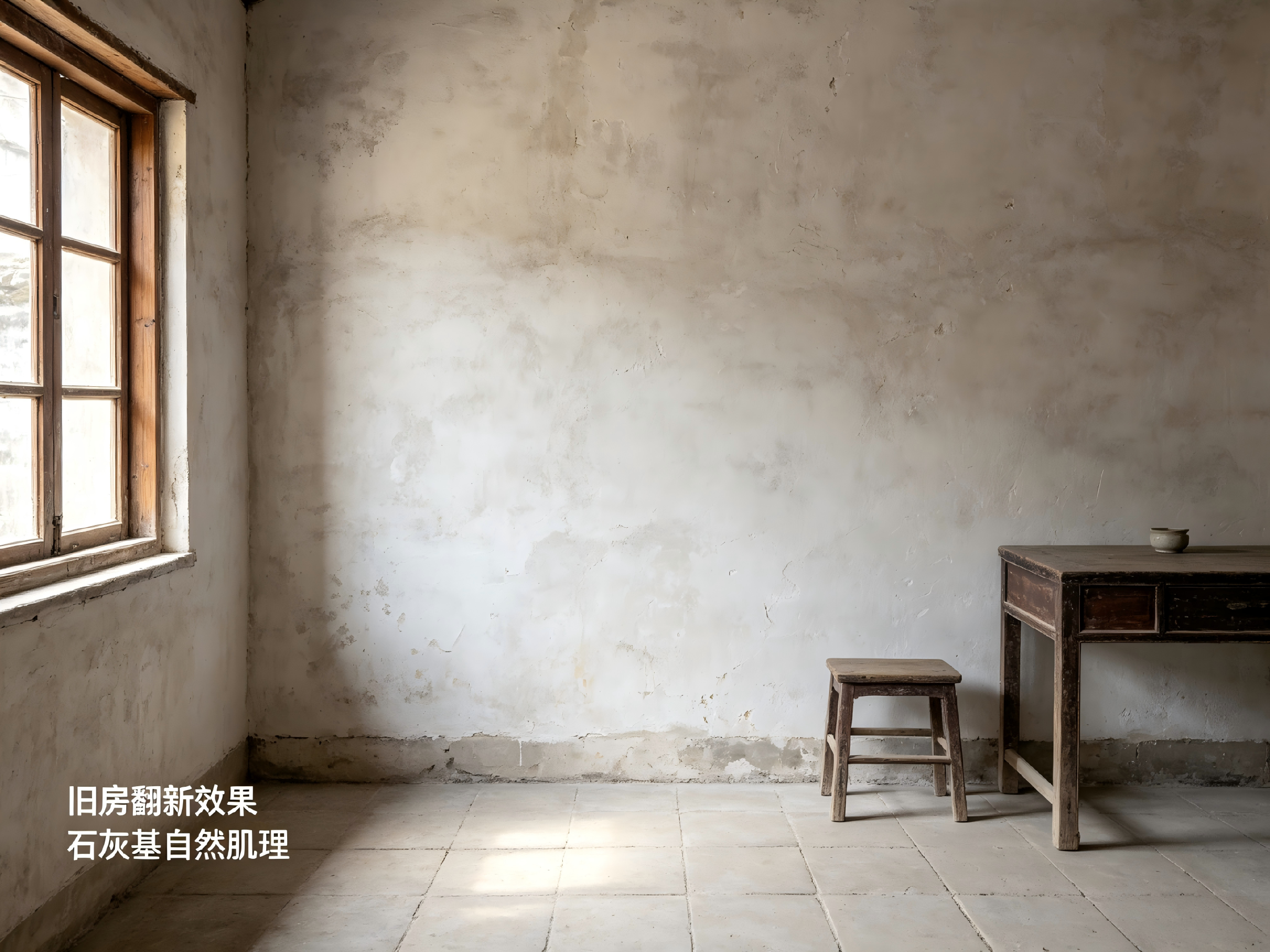
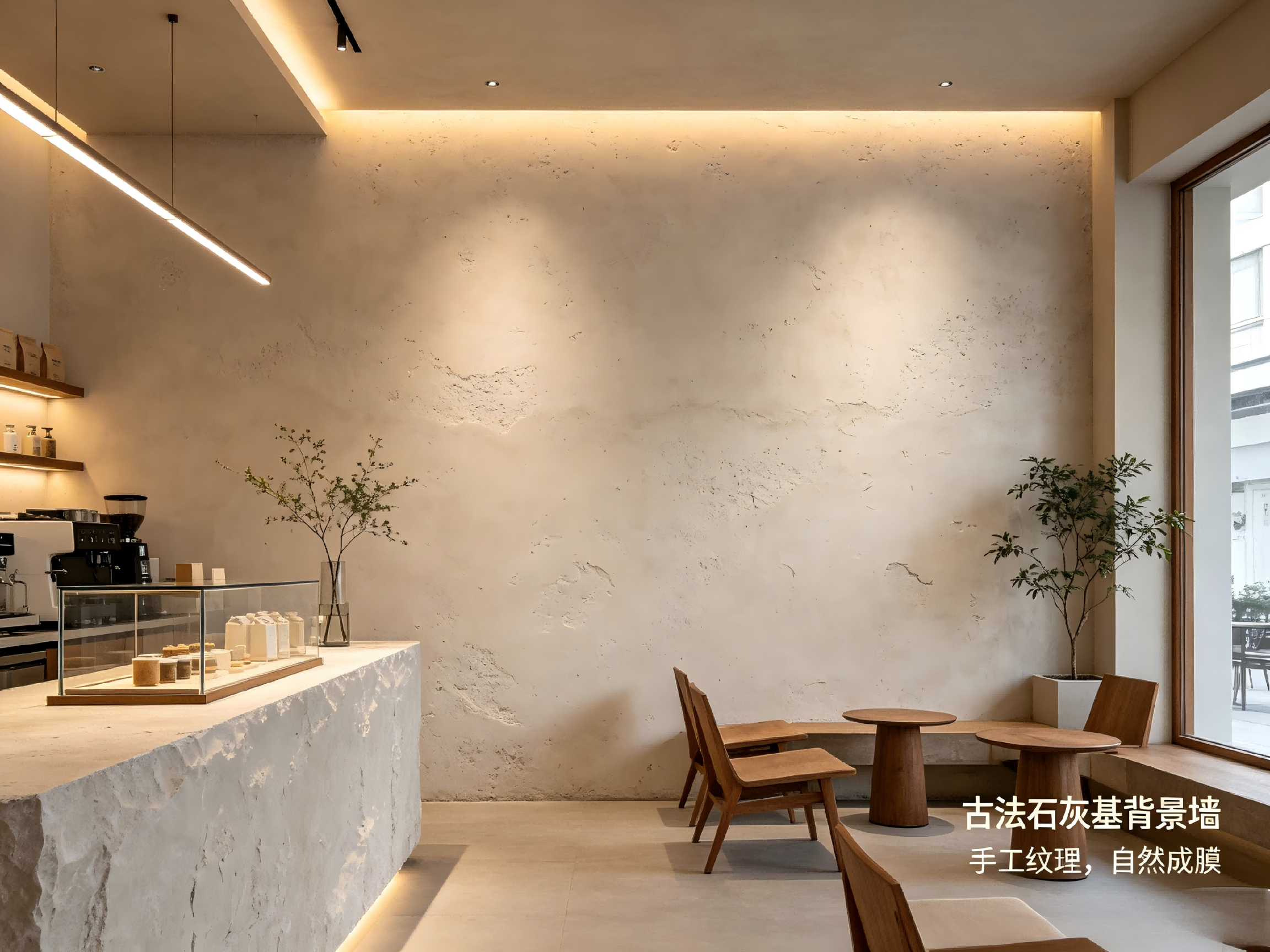
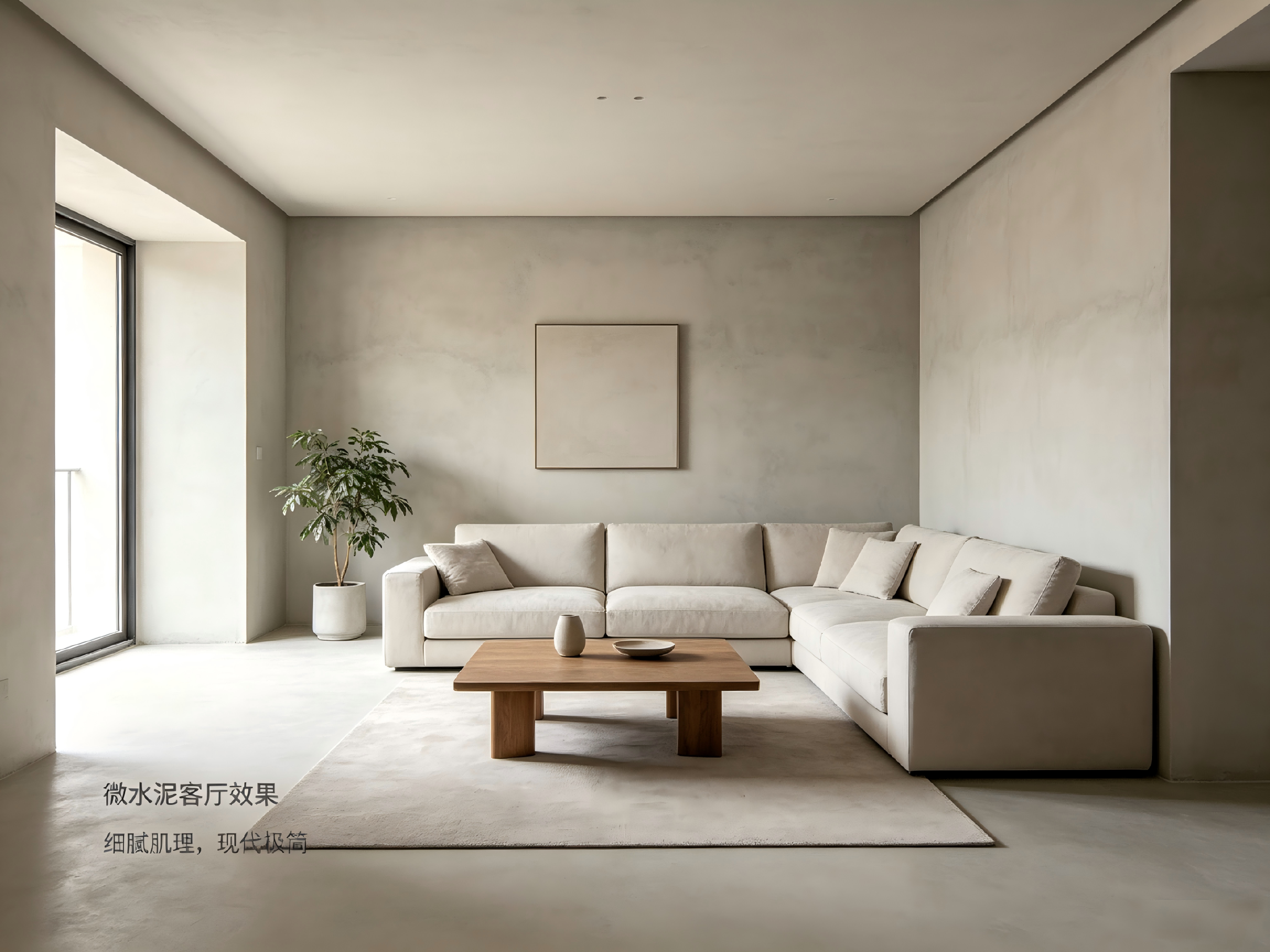
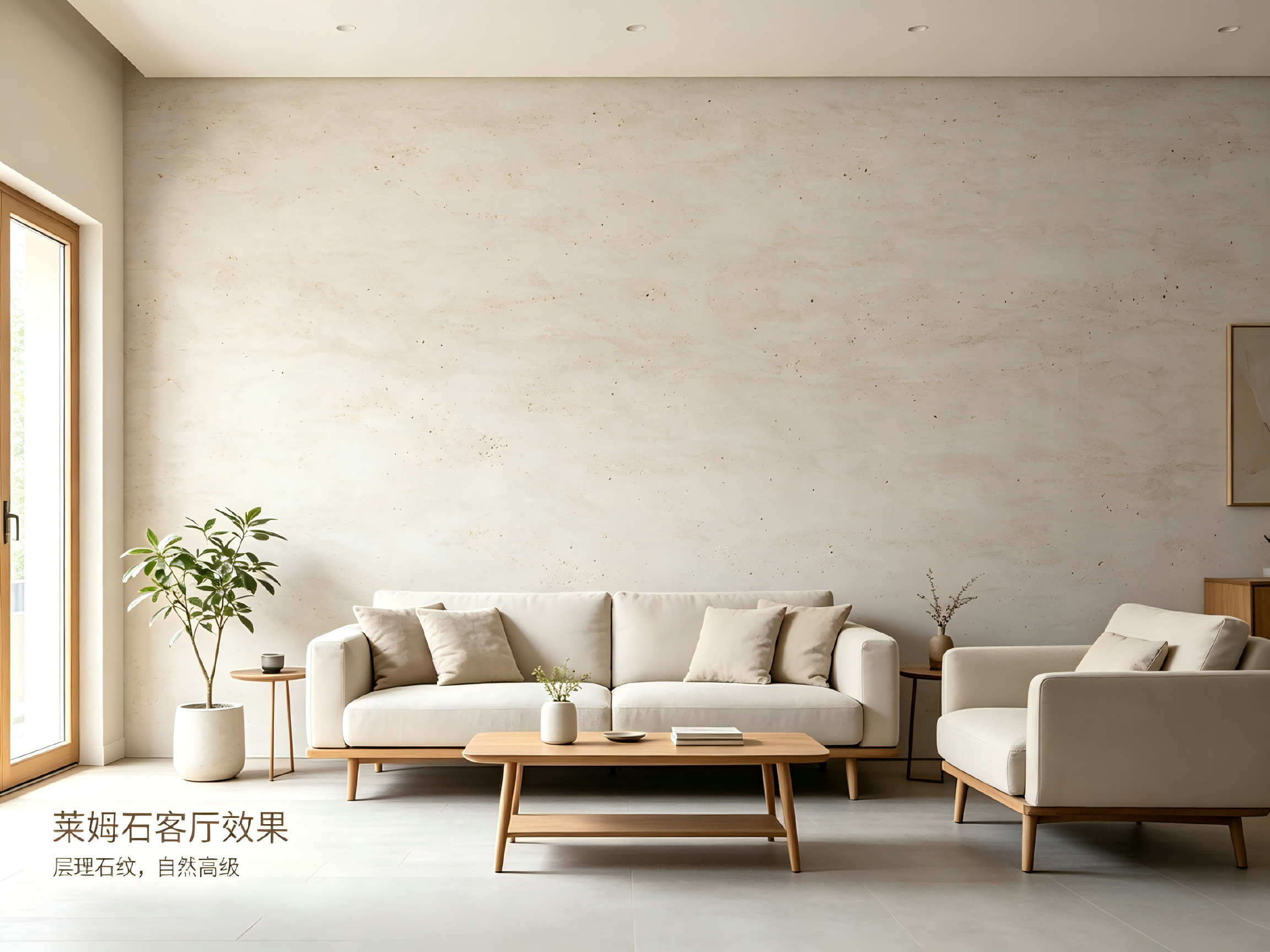
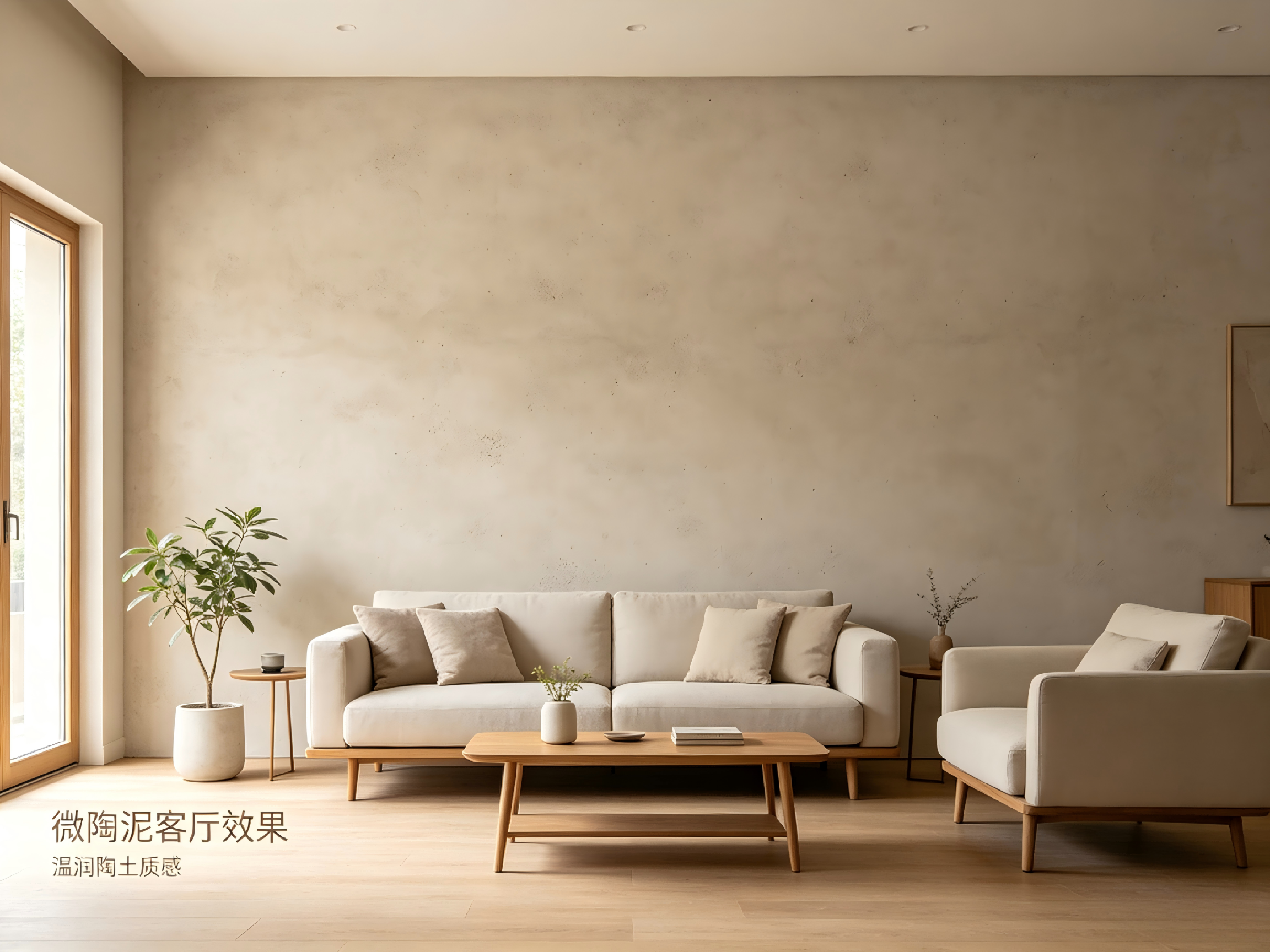
InquireLime-based wall materials
Leave your details, and our expert team will provide a customized solution.